An early alarm call found me out of the bed and minutes later creeping past a slumbering Steve at the far end of our long room in the hotel roof. I am well practice in this art of a quiet exit from early morning departures at home , the only difference was the loud spring loaded clunk of hotel door lock as I tried to ease it shut.
Once outside it was not long before I had a curious Redpoll in front of me once more and this time used the backdrop of the dark ash hillside behind as a backdrop.

I wandered around for a while in the birch scrub and down to a rocky beach but it was generally quiet except for the occasional Snipe whizzing around and Ringed Plover. I made my way back up from the beach along a wide but dry river bed of grey pebbles. You could imagine the torrent rushing over the stone bed after a heavy downpour as the water flowed down off the ash hills behind. I had not gone far when an Oystercatcher sprang forth into the air from behind a gravel ridge and started circling me with an alarm call.


I had seen this behaviour before and knew this meant there was a nest nearby but where was it in the expanse of pebbles? I very slowly walked away keeping a close eye on the ground and glad I did as I nearly stepped on the cryptic nest containing three eggs, leaving the birds to settle back down having seen off the intruder. The only other bird I photographed during my early morning start was a passing Greylag Goose that was nicely lit in the early low sun. Time for some breakfast.

After breakfast we checked out the hotel and continued our journey south and west towards the Reykjavik area. We decided to head for Heiðmörk which is the place we had skillfully managed to fail to navigate to earlier in the week. This is supposed to be a good area to see Ptarmigan.
As we entered the area we decided to stop in the parking area by the channel that connects the Elliðavatn and Helluvatn lakes as there seemed to be quite a few birds in this area.

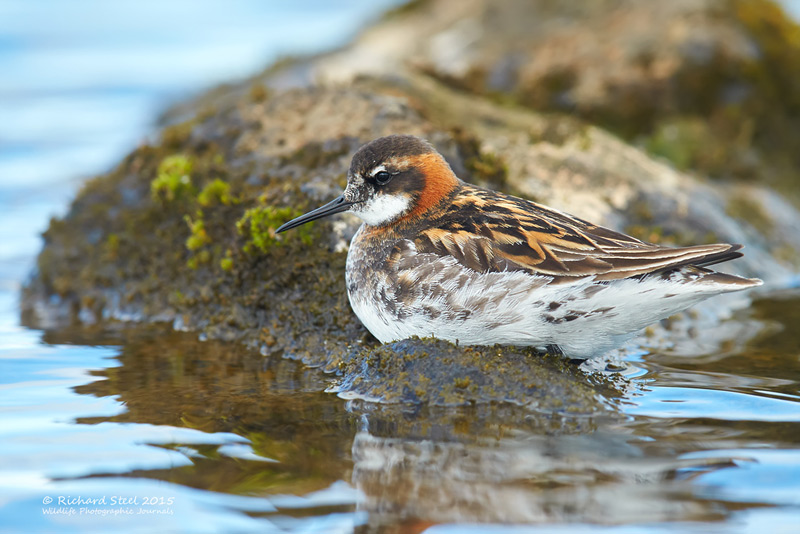
By now the sun was shining and haze was starting to develop. We needed some close subjects to photograph and were obliged by a few Red-necked Phalaropes and a very confiding Golden Plover which I probably spend too long photographing rather than looking around to see what other birds could be found. This was confirmed as we left as a Great Northern Diver came gliding across the relatively small Helluvatn and was literally just round the corner out of sight all the time.



After a quick brew we decided to take a tour around the tracks of Heiðmörk to see what birds could be found. There are numerous picnic sites dotted over this large expanse of coniferous forest and upland larva areas and as we pulled up to what seemed a very remote one, we spotted a male Ptarmigan on some short grass underneath a swing in a play area. This looked like a good opportunity but as we drew closer in the car, two young children who didn't seem to be with anyone, stepped out of the forest and made straight towards the swing resulting in a rapidly departing white bird. One of those moments that obviously was just not meant to be. On our slow drive around the tracks, bird life was surprisingly absent and our fairly long circuit only produced one Ptarmigan.
 It was time to try elsewhere and we headed towards Keflavik and found ourselves back by the lake which first stumbled upon when we arrived. The heat haze was in full force by now and trying to get sharp images through the wobbly air was proving a challenge. We stayed there a while and this produced some bathing Ringed Plover photographs and I went to check the beach where the was a stone causeway with a some Eider.


Time to hit Google on the phone to decide where to head to next and it was indicate there was a small sea bird colony at Keflavik which we went to check but only found some low empty cliffs. What was interesting though was how much more advanced the Lupins were down in this warmer south-west corner with the first starting to come in to flower. In the north they had only just started poking their first leaves up through the soil.

Coming away from there we did find a pair of Golden Plover which we stopped to photograph for a while in the softening light.


Following the coast road along we ended up at the northern end of the mosy south-western peninsula in Iceland at Garðskagi Lighthouse. Stepping out of the 'campervan' we found a large board information with photographs showing the species that could be found. It stated something like 'Snow bunting are a common breeding species along the seawall' This raised our expectations as Snow Bunting, despite being a relatively common bird in Iceland, had completely eluded us for nine days except for a possible sighting of one flying across the road several days earlier. Well we separated and walked and walked up and down that sea wall and the beach for ages and over a long distance trying to fine any signs of Snow Buntings but there were none to be found. Not even the chirp of a bunting was heard in our searching.
With nothing else there to photograph we decided to move in as it was starting to get late and we still had to find some accommodation for the night. The last bird of the day was a lone Whimbrel feeding along a grass verge on the edge of a car park.


Driving back into Keflavik we booked into the Hotel Keilir for the last two nights. A nice tidy twin room with a great view. After sorting out the days photographs and kit, we popped over the road to a Chinese Restaurant. We were quite late arriving given the standard 9pm kitchen closing time and it was a strange experience as they started packing up the place as we ate. Chairs went up on the surrounding tables and the floor mopped around us. Following my early start I was more than ready for bed by the point and was asleep within minutes of hitting the pillow. Tomorrow I would be waking to the final day of our trip.
Once outside it was not long before I had a curious Redpoll in front of me once more and this time used the backdrop of the dark ash hillside behind as a backdrop.
I wandered around for a while in the birch scrub and down to a rocky beach but it was generally quiet except for the occasional Snipe whizzing around and Ringed Plover. I made my way back up from the beach along a wide but dry river bed of grey pebbles. You could imagine the torrent rushing over the stone bed after a heavy downpour as the water flowed down off the ash hills behind. I had not gone far when an Oystercatcher sprang forth into the air from behind a gravel ridge and started circling me with an alarm call.
I had seen this behaviour before and knew this meant there was a nest nearby but where was it in the expanse of pebbles? I very slowly walked away keeping a close eye on the ground and glad I did as I nearly stepped on the cryptic nest containing three eggs, leaving the birds to settle back down having seen off the intruder. The only other bird I photographed during my early morning start was a passing Greylag Goose that was nicely lit in the early low sun. Time for some breakfast.
After breakfast we checked out the hotel and continued our journey south and west towards the Reykjavik area. We decided to head for Heiðmörk which is the place we had skillfully managed to fail to navigate to earlier in the week. This is supposed to be a good area to see Ptarmigan.
As we entered the area we decided to stop in the parking area by the channel that connects the Elliðavatn and Helluvatn lakes as there seemed to be quite a few birds in this area.
By now the sun was shining and haze was starting to develop. We needed some close subjects to photograph and were obliged by a few Red-necked Phalaropes and a very confiding Golden Plover which I probably spend too long photographing rather than looking around to see what other birds could be found. This was confirmed as we left as a Great Northern Diver came gliding across the relatively small Helluvatn and was literally just round the corner out of sight all the time.
After a quick brew we decided to take a tour around the tracks of Heiðmörk to see what birds could be found. There are numerous picnic sites dotted over this large expanse of coniferous forest and upland larva areas and as we pulled up to what seemed a very remote one, we spotted a male Ptarmigan on some short grass underneath a swing in a play area. This looked like a good opportunity but as we drew closer in the car, two young children who didn't seem to be with anyone, stepped out of the forest and made straight towards the swing resulting in a rapidly departing white bird. One of those moments that obviously was just not meant to be. On our slow drive around the tracks, bird life was surprisingly absent and our fairly long circuit only produced one Ptarmigan.
Time to hit Google on the phone to decide where to head to next and it was indicate there was a small sea bird colony at Keflavik which we went to check but only found some low empty cliffs. What was interesting though was how much more advanced the Lupins were down in this warmer south-west corner with the first starting to come in to flower. In the north they had only just started poking their first leaves up through the soil.
Coming away from there we did find a pair of Golden Plover which we stopped to photograph for a while in the softening light.
Following the coast road along we ended up at the northern end of the mosy south-western peninsula in Iceland at Garðskagi Lighthouse. Stepping out of the 'campervan' we found a large board information with photographs showing the species that could be found. It stated something like 'Snow bunting are a common breeding species along the seawall' This raised our expectations as Snow Bunting, despite being a relatively common bird in Iceland, had completely eluded us for nine days except for a possible sighting of one flying across the road several days earlier. Well we separated and walked and walked up and down that sea wall and the beach for ages and over a long distance trying to fine any signs of Snow Buntings but there were none to be found. Not even the chirp of a bunting was heard in our searching.
With nothing else there to photograph we decided to move in as it was starting to get late and we still had to find some accommodation for the night. The last bird of the day was a lone Whimbrel feeding along a grass verge on the edge of a car park.
Driving back into Keflavik we booked into the Hotel Keilir for the last two nights. A nice tidy twin room with a great view. After sorting out the days photographs and kit, we popped over the road to a Chinese Restaurant. We were quite late arriving given the standard 9pm kitchen closing time and it was a strange experience as they started packing up the place as we ate. Chairs went up on the surrounding tables and the floor mopped around us. Following my early start I was more than ready for bed by the point and was asleep within minutes of hitting the pillow. Tomorrow I would be waking to the final day of our trip.