Leaderboard
728x15
Showing posts with label Skylark. Show all posts

Spring Selection

Firstly apologies for not posting for a while, it has been a busy time for me. Having been made redundant from my job at the end of March, I decided to set up myself up in business offering lake design and rehabilitation consultancy services which has taken up a lot of time to get  up and running. Also at the end of April I managed to fall over, causing damage to both my camera and lens and so that was out of action for a while being repaired. Despite all these time constraints, I have still managed to  squeeze in quite a few short sessions although have not had much time to go through the images.

I do love Spring and how everything bursts into life after the long winter days and the air is once again filled with bird song. This year we had a fairly cold period during April with northerly winds blowing from the north keeping the temperatures unseasonally low.  This certainly seemed to put a temporary hiatus on bird migration northwards with many summer visiting migrant species being delayed in their arrival.

Anyway enough of my ramblings lets get on to some photographs......

I spent quite a bit of time this Spring photographing Black Grouse but I intend to dedicate a post to them so will just give you hint of what is to come with this photo of a male bird calling at sunrise.

I had a meeting up in Newcastle and as usual when I head in that direction, took the scenic route home to take in some moorland and red grouse.


Some time has been spent with the resident birds of the coastal strip that runs along the top of the Wirral Peninsula. The coastal gorse looked amazing this year in flower with swathes of bright yellow and it seemed a good opportunity to try and get some birds perched on it where possible. Skylark, Linnet, Wren and Stonechat were the main species  photographed.


While driving round one morning I suddenly remembered a report from a couple of years back of Mandarin Duck that used a small pond to pair up before breeding. The ducks are only present on the pond for a very short period so I was lucky to find them there when I went to check it out.

Of course one of the great parts of Spring is the passage and arrival of migrant birds. This spring I saw a report of a drake Garganey being present on a local lake and decided to go straight there. It was fortunate that I did as the bird had left and continued on its passage the next day. It is a while since I have put a Garganey in front of the camera so it was a pleasure to photograph one of these beautiful waterfowl, even though conditions and access at the lake present numerous challenges.


I am always amazed at the small migrants birds and think about the epic journey they have made from the south. For example the Wheatear coming up from Africa.

This is particularly the case for warblers and the long distances covered by these tiny birds weighing a few grams. Below are a selection of these travellers including Chiffchaff, Grasshopper Warbler, Willow Warbler and Whitethroat filling their air with their varied songs.

I also managed to find one of my favourite summer visiting warblers, the Wood Warbler that fills the woodlands with its amazing electric song.

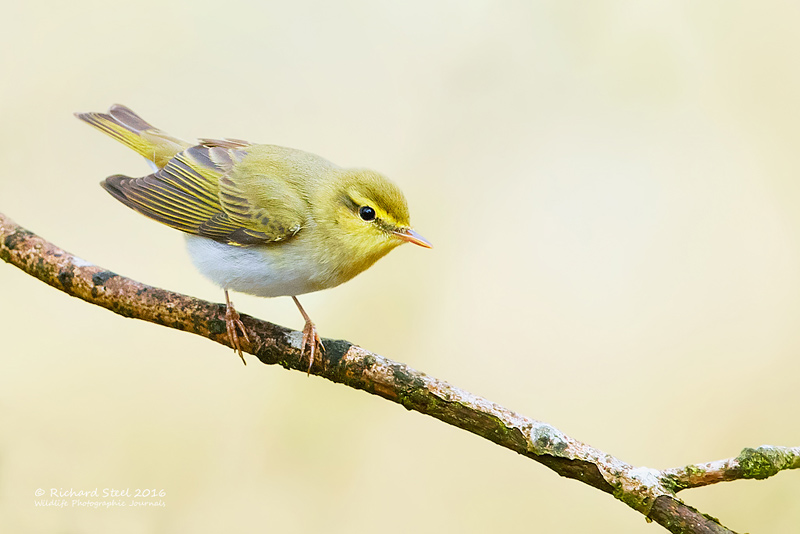
I will finish off the photographs of this post with one last species which is the Whinchat. The males when they first arrive look amazing but the colour often quickly seems to fade so it is always best to try and catch them early. Photographs of the female and male birds are below.


In two days time, I am heading north on my annual overseas trip. This years sees me returning to Arctic Finland and Norway with the majority of the time being spent on the Varanger Peninsula. Exciting prospects ahead and it will be good to return after my previous visit 6 years ago. Hoping the unpredictable weather is kind and that there will be plenty of photographs to share with you on my return.

Up with the Larks

A key piece of equipment for successful bird photography is a good alarm clock. First light is a busy period in birds' lives as they are often hungry from their overnight roost and need to build energy levels back up. The other benefit of course is that you also get that soft early light that shows the birds off to the best and the day has not warmed up enough for the focus ruining, wobbling air of heat haze to kick in. Of course at this time of year, and going into the summer, with the every increasing day lengths this can be punishing on a person's sleep regime. You have to be on your sight as the sun is appearing. So if you take in to account getting yourself up and out of the house (which includes a mandatory coffee) together with travel time, you end up having to set the trusty alarm clock to times when some people are just coming home from a night out.
Despite it being a struggle to get up at these unsociable times with usually results with you feeling later in the day (the mid-afternoon zombie time) like you have never slept in your entire life,   I do love these early mornings. A joy to travel along empty roads and the dawn period often has a wonderful stillness and freshness with the main sounds being just the wildlife around you.

Photography of skylarks definitely seems to benefit from an early start. Over the years I have spent a good deal of time with these birds but never seem to tire of what for me is the harbinger of spring. When images of skylarks start appearing on the back of the camera you know that spring is just around the corner and the first of the arriving migrants the Chiffchaff, the Wheatear and the Ring Ouzel will not be long in arriving.

Most people associate Skylark as a bird of flight as the flutter upwards in song until they nearly disappear from sight before descending to the preferred rough grassland habitat once more. However, photographing these birds in flight is a real challenge. Rather than fly past, which they only seem to do when chasing rivals in rapid twisting fights during periods of setting up their territories, they tend to go vertically straight up. Unless you are in close proximity to the bird when it goes up or down then your chances of getting photographs are slim. Of course they use the wind to aid them in their vertical liftoff and so the breeze needs to be blowing in the same direction as the light to get front lit photographs of the birds.

I have had some success with photographing them in flight previously and thought I would give it another go this year. Wind, light and birds all came together one morning for a memorable session which produced a good number of images.  Certainly it produced enough images, a few of which are here, to satisfy that early spring craving for these wonderful birds for another year.
Next year? Well may be I will try and capture some of those territorial mid-air battles between rival males which would be a big photography challenge. Mind you it wouldn't be so fun or rewarding if you didn't have to work for it, at least that's what I tell myself when fumbling around for the alarm off button at 4am.

Time for a Few Birds

I have been having a lot of fun photographing brown hares this spring and started feeling I had been neglecting the birds a little. This was particularly the case as I could feel spring gathering around me with various migrants coming through and arriving locally. So it was time for a bit of bird time. Also I wanted to get in a little bird practice as I am away to Romania in three weeks where the majority of subjects will be birds. This post is a small collection of different birds photographed recently from a series of often short sessions in various places.

Starting of with a trip down south recently to visit my parents which resulted in a brief stop-off in Bushy Park to break up the journey. The avian soundscape of the London Parks has been transformed by a flourishing population of Ring-necked Parakeets, with their constant sqwarking from the trees. Their vivid green colours certainly add a splash of the exotic to these park lands. This is a species of considerable debate given the suggested competition between these introduced invading species and our endemic tree nesting birds. The light was not great on the day so I was looking for birds in places where I could avoid the sky which either meant low down or with a tree trunk filling the frame.

On one of the ponds in the park there were three Pochard. This is a duck species that has frustratingly evaded by efforts to photograph it and as on this occasion I have only managed a few photographs. This pair of Pochard where in the middle of mating with the female getting half 'drowned' in the process.
Moving closer to home, I have undertaken the occasional early morning or evening session before or after work. My good friend Gerhard created, with quite a lot of sustained effort, an 'out in the wild' feeding station for Linnet. These are quite a flighty species and so it provided a good opportunity to get some photos and watch the birds up close.  His efforts paid off attracting increasing numbers of the birds, which were mainly young birds or females but there were a couple of better coloured males amongst them. They tend to be a slightly overlooked species  which most will associate with loose bounding twittering flocks, but a good coloured male up close is a fine looking bird.
It was nice to see good numbers of Skylark along the local coastal strip. There liquid song dripping down from their high display flights is always a pleasure to the ears.
Always a tricky subject in flight.
This next photograph was a completely unplanned bonus as the bird landed next to me in a bramble patch whilst trying to photograph some warblers. A male Reed bunting in all the finery of its full spring plumage.
Over the last week or so I have finally turned my attentions to the increasing numbers of arriving warblers. These birds really bring an area to life as the once silent reeds, scrub and brambles suddenly takes on a whole new life with the incessant whirling, clicks, and scratchy warbles of various species trying to lay claim to a breeding patch. To appreciate this at its best requires the alarm clock to be set to a very early time which will leave you feeling fuzzy headed with tiredness by the early afternoon. Its worth it though.

A Sedge Warbler establishing its territory over an area of brambles from four different song perches.
Another lover of the security provided by a bramble patch is the Grasshopper Warbler. Now I did intend to avoid these this year but then again I say that every year and was once again drawn in by that mesmerizing insect like song. For me watching these birds broadcast their song is one of the real pleasures at this time of year and no doubt I will find myself drawn to them next April.

An Extraordinary Lark

I must admit having risen from the bed at some unearthly hour, the morning had not been very productive, with only a couple of Chiffchaff photos for my efforts, and so my thoughts were turning to a return home for some breakfast.

En route I decided to try one last place as a last ditch attempt to put some photos on the memory card and diverted off to a site close to home to look that beautiful songster, the skylark.  It proved to be a sensible decision. It is strange how small timing decisions can often make the difference between success and failure in wildlife photography. I am sure many of you, who pursue wildlife with the camera, have witnessed your subject appear where you have been sat as you have decided to walked away due to inactivity.

As I walked up the small grass slope I spotted a skylark and the next 90 minutes turned into an incredible encounter with an unusual bird. I crept into position and the bird seemed completely oblivious to me.

In fact as I approached, the bird decided to walkover towards me until it was standing about 30cms away and far too close to photograph. Strange. I was then left with a dilemma  should I try backing slowly away so I could take some photos, with the risk of the bird departing,  or wait for it to move.  

The bird was going nowhere and after a while I backed off, only for it to come trotting through the long grass to stand right next to me once. This was repeated several times before the lark headed skywards in vertical song flight. Up and up it went in full song, only to descend once more and land right next me.

Two dog walkers were coming along the path which I was convinced would see the departure of the bird but as they got closer it just casually walked around and hid behind me, to re-emerged next me once more after they passed. This was all very odd the bird just seemed to like being next to me. It was obviously on its own and still looking for a mate and seemed to content to spend some time with me.

Many people associate skylarks with their song flight when they almost disappear from sight in the blue yonder above, before slowly descending with their liquid song and finishing off with sudden plunge back to earth.  However, they also have a ground display when they go up on extended legs, raise their tail and appear to 'dance' and bob on the spot while in song. This is what the bird was now doing right next to me. To have a skylark stood singing and displaying literally right next to you, I can only describe as a sublime experience.
I decided to do some ground level photo given this unique opportunity. Photographing a small bird on the ground can be tricky when the grass is even a moderate length as there often stray blades which insist on appearing in the wrong place.  It proved even more difficult on this occasion as the bird insisted on coming too close.
Having taken plenty of photos it was definitely time for breakfast. Even when I stood up to leave the bird was still standing right next me. As I walked back to the car, the bird took flight, flew straight down towards me and landed in front of me once more. It continued to do this for the next 400m before finally deciding to go off and find itself some breakfast. A very strange bird but a superb encounter with an extraordinary lark.
Leaderboard